The Unknown Nutrient: Polyphenols
Polyphenols deserve much more attention

We all know that bad food leads to an array of health issues. But is the opposite also true? Does good food make people healthy? Can “good food” repair health issues, caused by stress, alcohol, smoking, polluted air, ultra processed foods and other causes?
The world is inundated with nutrition advice. Some consultants focus on macro nutrients: carbs (carbohydrates), fiber, fats and proteins. Others focus on micro-nutrients: vitamins, minerals and polyphenols.
Where most readers will be familiar with carbs, fiber, fats, proteins, vitamins and minerals, few know about polyphenols. Food science has developed rapidly since WW II (feeding troops at the front line kicked off the science) and polyphenols have for decades been hiding in plain sight. Recent research makes clear that plant-created polyphenols are a human body’s most important repair tool.

Why have polyphenols been hiding in plain sight? A good example is olive oil. Olive oil is rich in mono-unsaturated fatty acids (MUFA) and poly-unsaturated fatty acids (PUFA). This makes olive oil the most healthy fat. Statistics show that people who consume olive oil daily, have lower rates of bad cholesterol and lower blood pressure. Hence, countries where olive oil is a daily staple (read: Mediterranean countries) have significant lower rates of cardiovascular diseases. So scientists assumed the healthy fats (MUFA, PUFA) to lead to lower levels of “bad” cholesterol (LDL), less hypertension and more flexible arteries.
It turns out that people who live on the “Mediterranean Diet” consume olive oil which is rich in polyphenols. This oil has an identical percentage of MUFA and PUFA as other olive oils (roughly 74%), but the polyphenols take care of the health improvement. A review study in the food science publication Nutrients shows that olive oil can significantly lower the risk of cardiovascular events like heart attacks and strokes. It lowers cholesterol and blood pressure, improves the flexibility of arteries and reduces inflammation. However, the review notes that these benefits are more consistently observed in high-polyphenol EVOO (= Extra Virgin Olive Oil).
Note: only a few EVOO producers mention the polyphenol content on their bottles). However, you can taste polyphenols: they give olive oil a pleasantly bitter taste and provide a peppery effect in your throat).
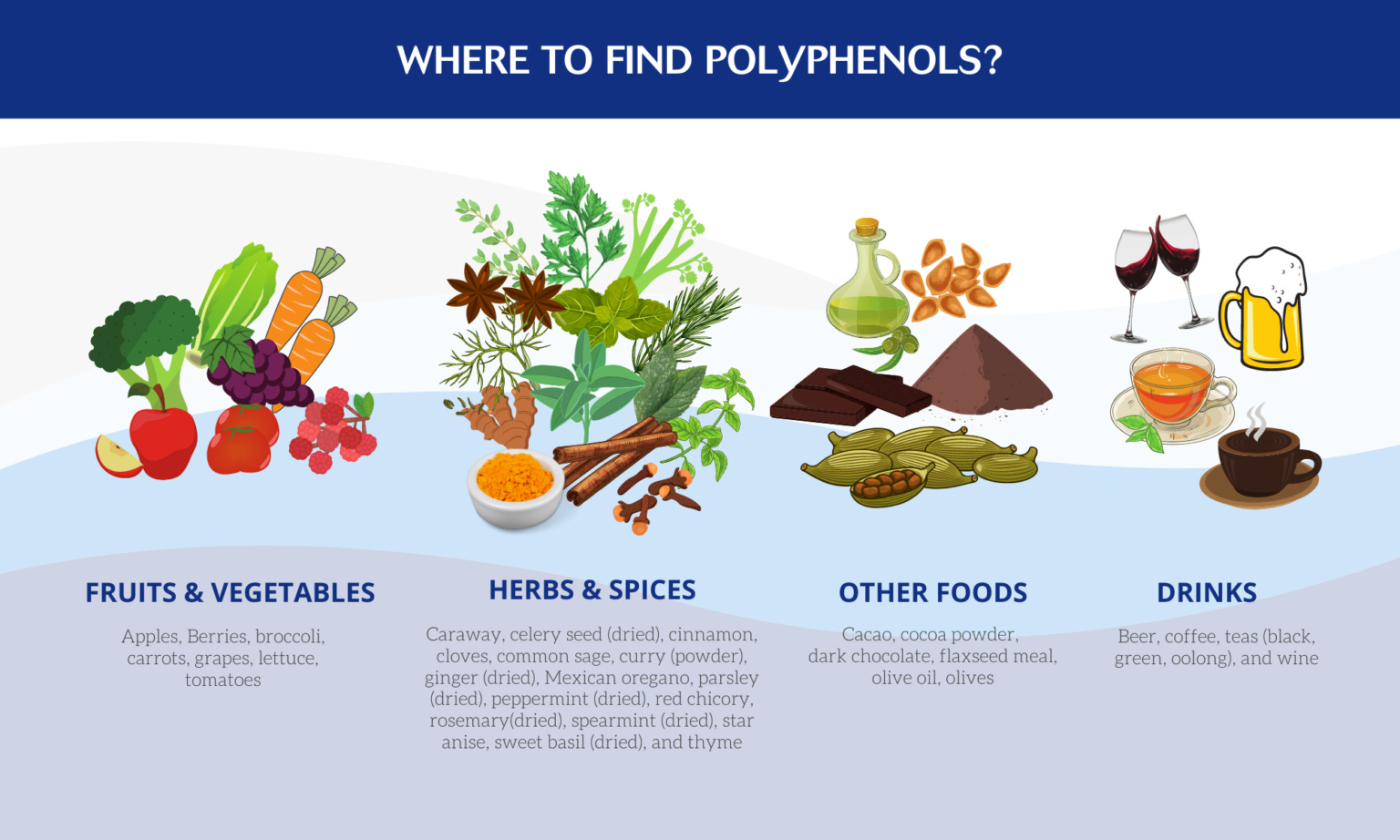
The Mediterranean diet is credited with longevity, good health and low incidences of cancer, dementia and cardio diseases. It turns out that the Med Diet is not only healthy (and delicious), but also very rich in polyphenols. Polyphenols are found in fruits, vegetables and olive oil. These three components make up the core of the Med Diet diet. Since polyphenols fight inflammations and cut off the energy supply to cancer cells (to name just two effects), people enjoying the Med Diet live longer in good health. In other words, where the Med food keeps the body healthy, polyphenols ensure repairs take place.