
Qualories
Are all calories equal?

Calories are arguably the most confusing item in nutrition. There are calories, Calories and kilocalories, yet scientists prefer Joules and kiloJoules. A calorie is the amount of energy to heat 1 gram of water with 1 degree (Celsius = centigrade; i.e. 1.8F or 1K … haha). An apple contains approximately 95,000 calories, so nutrionists started talking about 95 kcal or 95 Cal (with a capital C).
Today, I’d like to add to the confusion and introduce a new word: Qualories. I have googled it and it has been used once (see this post from 2016). Which is actually a bit of a surprise. Let’s use it more often!
Physically, a calorie is a calorie. It is a measure of energy. However, biologically there are huge differences. Once a calorie enters the complex laboratory of the human body, the source matters immensely. Just like cholesterol there are good and bad calories. The good calories are Qualories. They add to your health, not your waiste.
Why the Source Matters
In your body, calories are processed through different metabolic pathways. Here is why 100 calories of cookies are not burned the same way as 100 calories of broccoli.
The Thermic Effect of Food (TEF): Your body has to “spend” energy to digest food. Protein has a high TEF, requiring about 20-30% of its own energy just to be processed. Fats and carbs require much less (usually 0-10%).
Insulin and Hormones: High-sugar calories trigger a massive spike in insulin, the body’s primary fat-storage hormone. Fiber-rich calories or proteins don’t cause the same “storage mode” signal.
Satiety (Fullness): 200 calories of broccoli is a massive volume of food that fills your stomach and suppresses hunger hormones. 200 calories of cookies is a few bites that leave you hungrier than before.
Foods That Boost Your Natural GLP-1
More and more people are using GLP-1 medication to loose weight. Brands like Ozempic and Wegovy contain semaglutide, a chemical substance that tells your brain that your stomach is full and you have to stop eating. If you are looking for the “natural version” of the semaglutide effect—slowing digestion and signaling fullness to your brain—focus on these Qualories:
High-Fiber Foods: Soluble fiber is fermented by gut bacteria into short-chain fatty acids, which directly stimulate GLP-1 release.
Examples: Oats, barley, lentils, beans, chia seeds, and apples.
Lean Proteins: Amino acids from protein are highly effective at triggering satiety hormones.
Examples: Eggs (especially egg whites), Greek yogurt, chicken breast, tofu, and white fish.
Healthy Fats: Certain fats slow gastric emptying and increase GLP-1 levels.
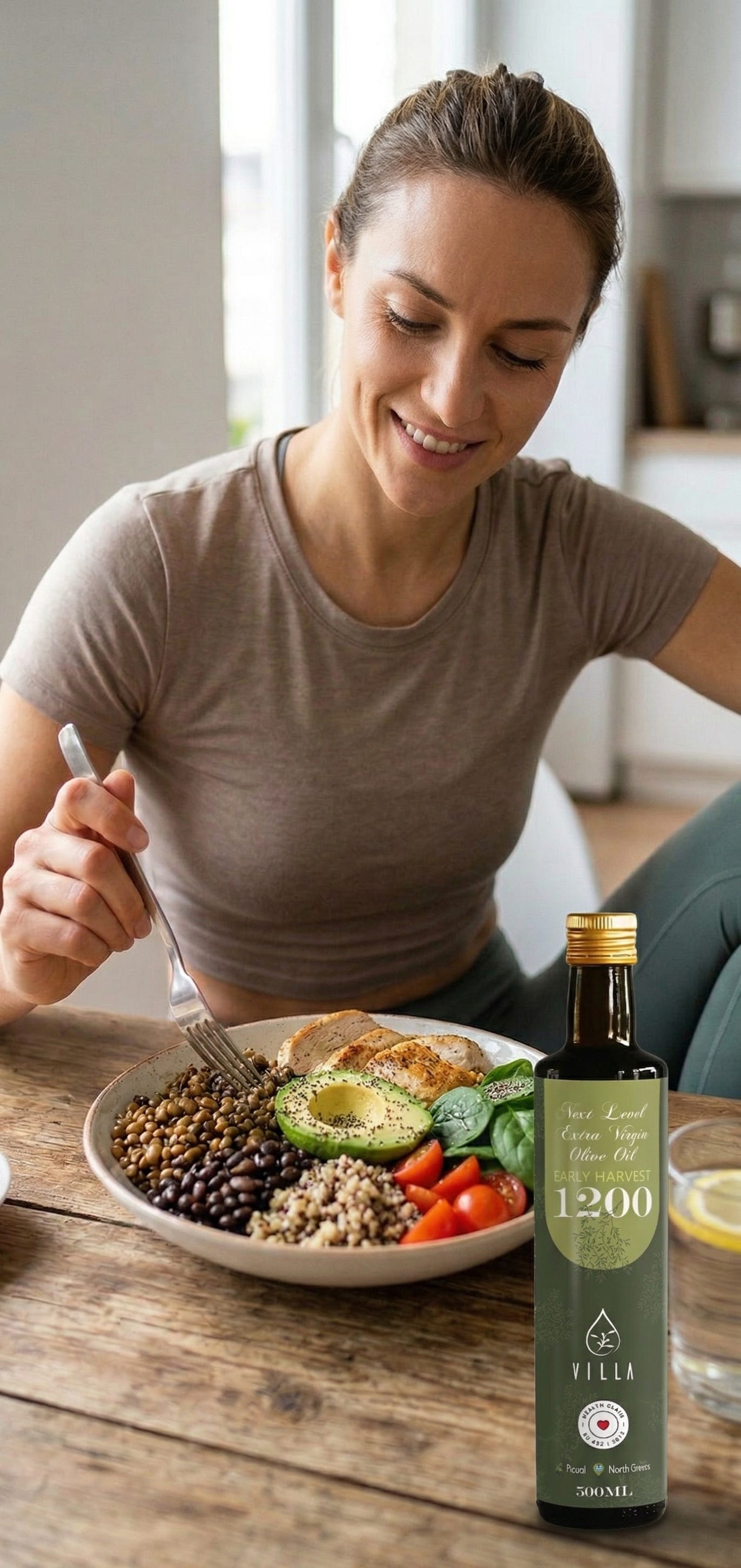
Examples: Avocados, olive oil, and nuts (almonds, walnuts).

Why Food Isn’t Exactly Like the Medication
The big difference is staying power. Natural GLP-1 from food is broken down by your body in about 5 minutes. Semaglutide (Ozempic/Wegovy) is modified to resist being broken down, allowing it to stay in your system and work for 7 days. That looks like a big plus for the medical road. But for most people, a brief signal of satiety is sufficient to stop eating. Add to this that the food that promotes satiety is very good for your body (proteins, fibres, fats, vitamins, minerals and polyphenols) and it is clear that eating your way to a lean body is, for most, the best way to go.
Qualories
The average person needs about 2,000 Calories per day. Roughly 70% is spent on the basal metabolic rate (BMR). This is the energy your body uses just to stay alive (breathing, heart beating), even while lying in bed. The liver is the biggest calorie burner, followed by the brain.
Then there is energy used to digest what you eat. This is about 10% of your daily intake of calories.
The rest (roughly 20%) is used for physical activity. If you exercise daily, the percentages may differ somewhat, and the required calories might be higher than 2,000. Endurance athletes may burn 5,000 to 8,000 Calories a day.
There is an optimal intake of types of calories. It varies per person. This is what I call Qualories: the right calories, packed in the right nutrition.
Hig Intensity Interval Training requires simple, fast-digesting carbs (carbohydrates). Think a banana, a slice of white toast with honey, or a small handful of dried fruit 30–60 minutes before training.
Endurance athletes require complex, slow-release carbs 2–3 hours before. Oatmeal with olive oil, nuts, brown rice with lean protein, or whole-grain pasta.
However, I bet you probably sit behind a desk while reading this post. In that case, qualories come from fruits, legumes, veggies and olive oil - the same foods that bring you polyphenols.

Waistline and Weight Loss
Let’s take the concept of qualories a step further. Sitting behind our desk, we might like to loose weight and get rid of bulges in our waistline. Social media influencers tell you to eat less than you burn, or burn more than you eat. The simplicty of a calory deficit is misleading. The burn-baby-burn strategy is equally misleading. I am not saying they are wrong, but they are too simple. The human metabolic system is incredibly complex. Cutting down on calories or exercising more is essential, yet often insufficient to loose weight or get a more attractive waistline. For many, repairing the metabolic system is essential. This is where Qualories are linked to polyphenols. Polyphenols repair underlying causes, leading (among others) to less inflammation and a healthy gut. If you’d like to know more, please read earlier posts about “The Mother of All Diseases” and “The Fat That Slims”