
Polyphenols - the essential nutrient
A recap of the power of polyphenols

Is there any food that is not promoted as “proteine rich” these days?
Is there any parent who does not want his kids to take in more vitamin C?
We all need proteins, carbohydrates, fibres and fats. These are the so-called macronutrients. We also need minerals, vitamins and polyphenols, the so-called micronutrients. And while most readers will have some idea of what proteins and vitamins are (and where to get them), most readers may not have a sufficient understanding of polyphenols.
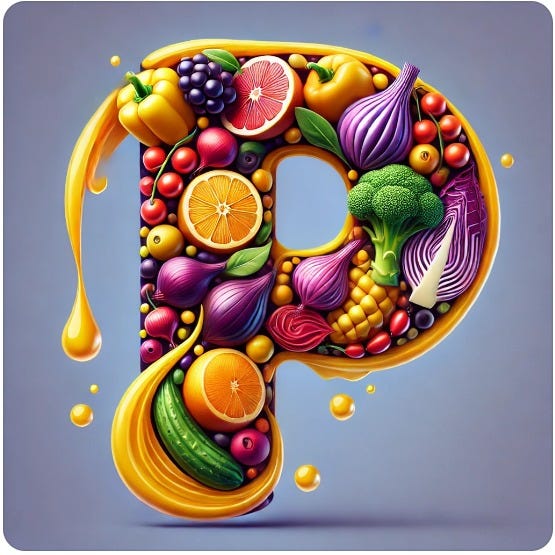
Polyphenols are plant-created (i.e. “phytochemical”) compounds, which are used to fight off bacteria, viruses, fungi and other challenges plants and trees have to deal with. Some do this very successfully. My favourite example are olive trees. They grow thousands of years old, in a harsh and unforgiving climate, with hot and dry summers and cold winters. An essential element of their longevity is the polyphenols they produce. Olive oil, which is pressed from the fruit of olive trees, contains tree-produced polyphenols. Some farmers specialize in producing polyphenol-rich olive oil. This oil contributes greatly to human health. One can taste the presence of polyphenols, since this oil has a pleasant bitter and a pungy peppery effect upon swallowing.
Most polyphenols are easy to detect, since they taste bitter, peppery or adstringent. Check the examples in the picture hereunder.
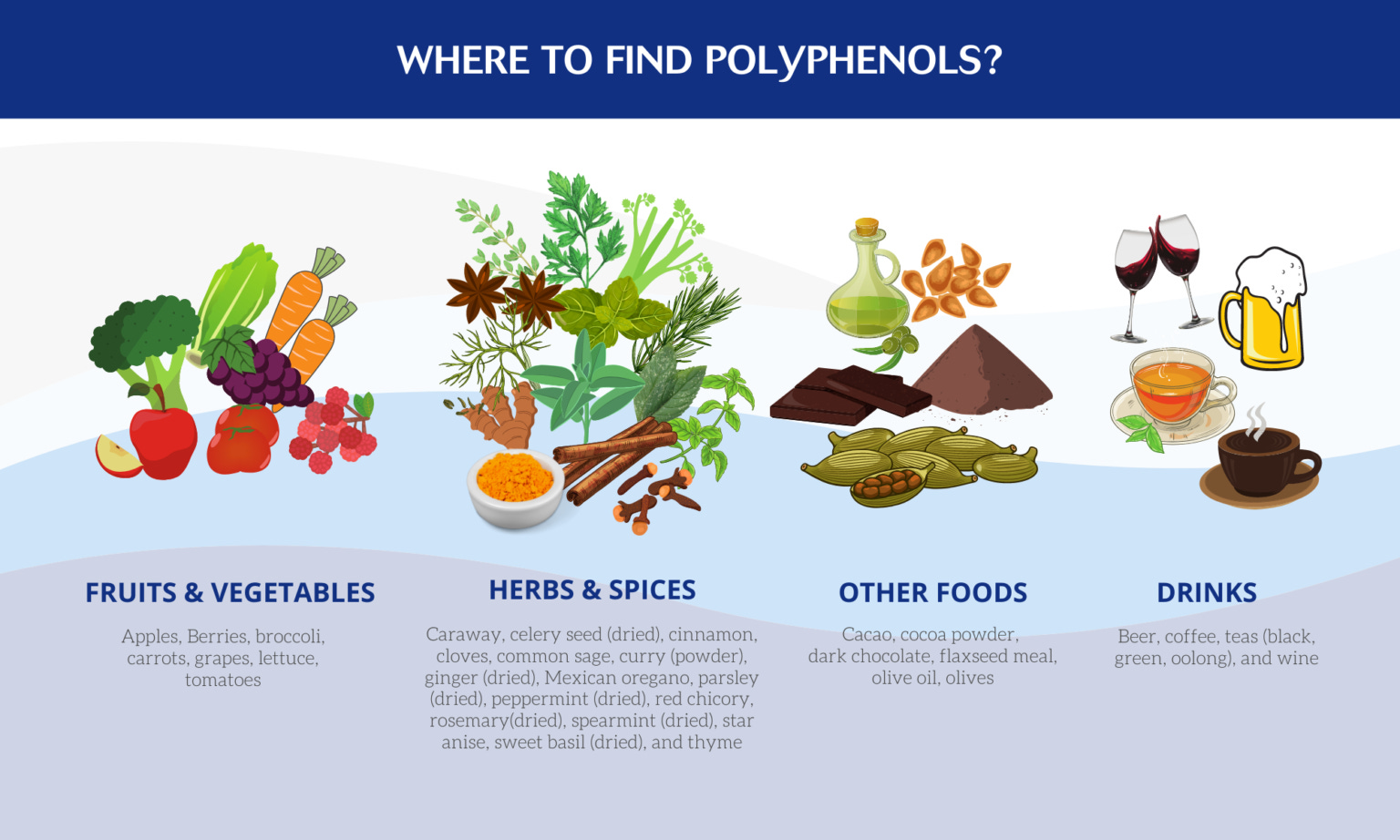
If you want to know more about the power of polyphenols, read our Substack post from 16 april 2025. In a subsequent post we explained what polyphenols are. They’re all around us, mostly in coloured vegetables and fruits, but also in spices and other foods. Indeed, coffee, tea, (red) wine and (extra virgin) olive oil are also rich sources of polyphenols.
There are about 8000 known polyphenols. Most serve as antioxidant. They neutralize polycyclic aromatic hydrocarbons (PAH). PAHs are harmful substances that form during incomplete combustion of food and cause cancer.
Other polyphenols contribute in another way. In a recent post we described how polyphenols can vastly reduce the number one cause of death: cardiovascular issues, like too high blood pressure, too high cholesterol and inflexible arteries.
Polyphenols are also important to cure (chronic) inflammation. Inflammation of the gut is one of the main causes of obesity. This is why many people do not loose weight despite frantically maintaining a calorie deficit. Our post from a fortnight ago gave more information.
Thank you for reading this contribution. In subsequent posts we will describe how polyphenols can help to prevent cancer, reduce the incidence of dementia and Alzheimer’s and make atheletes perform at higher levels. Please support our research and subscribe: for free or, if possible, for a modest amount.