
Oil on the Fire
Fighting Inflammation with Extra Virgin Olive Oil

Redness, heat, swelling, pain: these are signs of inflammation. When injured or attacked by germs, your immune system sends in white blood cells to protect and heal. The result is inflammation. It is crucial for survival.
But inflammation can be a dual-edged sword. When inflammation becomes chronic -- a persistent, low-grade fire simmering silently beneath the surface -- it can become the basis for life-threatening diseases.
Chronic Inflammation: The Smoldering Fire
Chronic inflammation often goes unnoticed. It is a low-grade inflammation that isn’t limited to one spot, but is often spread throughout the body. Because the inflammation isn’t intense, pain receptors aren’t acutely triggered. There is no red, swollen spot to point to. The symptoms are vague and easy to ignore. They are often dismissed as getting older, tired, stress or being busy. You might not feel 100%, but you aren’t sick enough to stay in bed. You don’t feel chronic inflammation as pain, but rather as a lack of vitality.
How to “feel” Chronic Inflammation
Even though you don’t feel acute pain, the body does send subtle signals.
Unexplained Fatigue: Waking up tired even after sleeping enough.
Brain Fog: Trouble concentrating, forgetfulness, or mental sluggishness.
Vague Aches: Stiff joints in the morning or muscle aches without having exercised.
Digestive Issues: Bloating or irregular bowel movements (often the starting point of inflammation).
Skin Issues: Eczema, rashes, or puffy skin.
Many people ignore these signals for years, until they have to see a doctor with serious follow-on issues. Chronic inflammation is the underlying driver of many major diseases, including heart disease, type 2 diabetes, arthritis, Alzheimer’s, and certain cancers. It is often triggered by modern lifestyle factors, such as persistent stress, insufficient sleep, environmental toxins, smoking, alcohol and, significantly, a poor diet: processed and ultra-processed foods, sugary drinks and sodas (even when “sugar-free”), too much salt or insufficient fresh ingredients and fibres. (Yes, eating typical restaurant food most days of the week unfortunately qualifies too). Over time, this constant state of alert damages healthy cells, tissues, and organs.
Food Kills. Food Heals
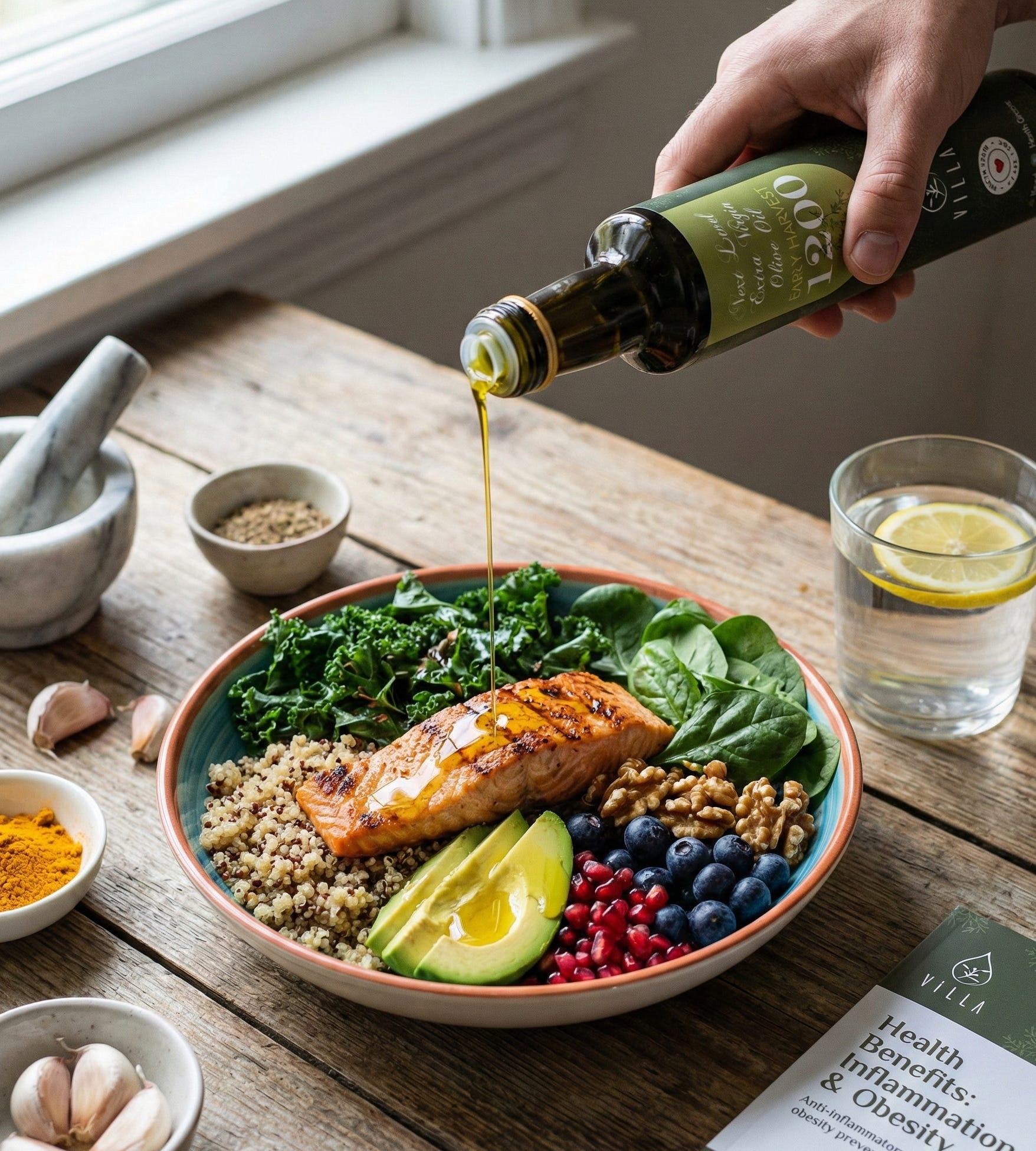
Fortunately, the right food makes a powerful medicine. An anti-inflammatory diet shifts the body from a state of chronic disease to healing. To douse the internal flames, reduce inflammatory triggers like processed sugars, refined carbohydrates (like white bread), and deep-fried foods. Instead, fill your plate with whole, antioxidant-rich foods. Prioritize fatty fish rich in omega-3s (such as herring, sardines and salmon), vibrant berries, leafy greens like kale, spinach or brocoli and (unsalted) nuts. Spices like turmeric are also potent tools.
An important pillar is extra virgin olive oil. Polyphenol-rich olive oil has a bitter taste with a pungent effect on swallowing. The healthy fats in olive oil are essential for maximum absorption of polyphenols. For example, curcumin, the healthy polyphenol in turmeric, is lipophilic (fat-loving). It cannot dissolve in water, but it dissolves perfectly in fat. The fat acts as a vehicle, carrying the curcumin through the gut wall and into the bloodstream. So, by changing what you eat, you can actively calm inflammation and protect your long-term health.
The 3 roles of Polyphenols
At a cellular level, inflammation is triggered by specific signaling pathways (such as the NF-κB pathway). Polyphenols have the unique ability to intercept these signals. They inhibit the enzymes and proteins that tell your body to produce inflammatory chemicals, effectively “muting” the alarm before it becomes chronic.
Inflammation often creates free radicals—unstable molecules that damage cells (oxidative stress). This damage triggers more inflammation, creating a vicious cycle. Polyphenols are potent antioxidants; they hunt down and neutralize these free radicals, breaking the cycle and protecting your tissues from damage.
Recent research suggests polyphenols act as a “prebiotic” for your gut. Since you cannot fully digest them, they travel to your colon where they feed beneficial bacteria (like Akkermansia and Bifidobacteria). These bacteria then produce anti-inflammatory compounds (like butyrate) that soothe the gut lining and calm the immune system system-wide.