
Hidden in Plain Sight
How to find nutrition rich in polyphenols

When running errands, it is easier to take the car, although walking or cycling would be better, both for your body as well as for the planet. When you’re tired but still need to cook dinner, ordering take-out is easier, although preparing a meal yourself is healthier and cheaper (and probably better for the planet too).
In short, we’re drawn to the easy ways. So are our taste buds. Foods rich in sugar and salt (often highly processed) are much more popular than bittter, astringent or peppery ones. Yet, the latter are typically healthier than sweet or savoury snacks. Bitter, astringent (i.e. the dry, contractionary sensation) and pungency all point towards the presence of polyphenols.
Polyphenols are a large group of beneficial plant compounds found in many foods. In earlier publications, we provided evidence of polyphenols preventing and fighting cancer, obesity and heart diseases. To live long in good health, it is essential to ensure your nutrition includes sufficient polyphenols.
Here are some of the foods that are particularly rich in polyphenols:
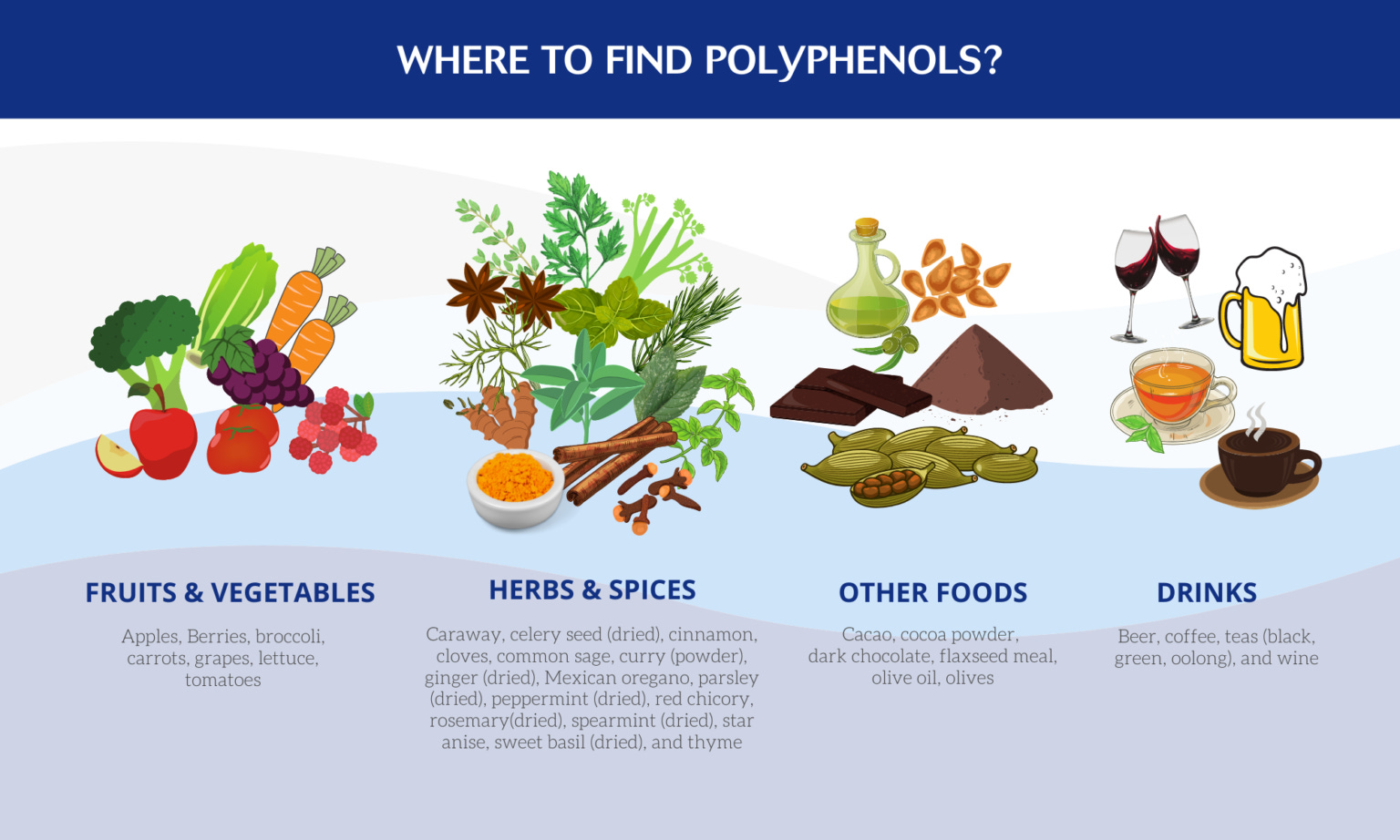
Spices and Herbs
Cloves
Star anise
Capers
Cinnamon
Turmeric
Cumin
Oregano
Sage
Rosemary
Many of these can be grown in pots in your house. Adding fresh herbs to your food cuts two ways when it comes to health: you can reduce salt content and you’ll get more healthy polyphenols. And everything tastes much better.
Fruits
Berries: Black chokeberry, elderberries, blueberries, blackcurrants, and blackberries are among the highest.
Other fruits: Plums, cherries, apples, black grapes, and pomegranates.
Olives and olive oil (which should taste fruity and bitter with a peppery kick after swallowing)
Beverages
Cocoa (and high-cocoa dark chocolate)
Coffee (best consumed black)
Black and green tea
Red wine (replace with red grapes or rhubarb when cutting down on alcohol)
Nuts and Seeds
Chestnuts
Hazelnuts
Pecans
Flaxseed
Walnuts
Flaxseed and walnuts have the added benefit of being rich in omega-3.
Vegetables
Artichokes
Red and green chicory
Red onions
Spinach
Broccoli
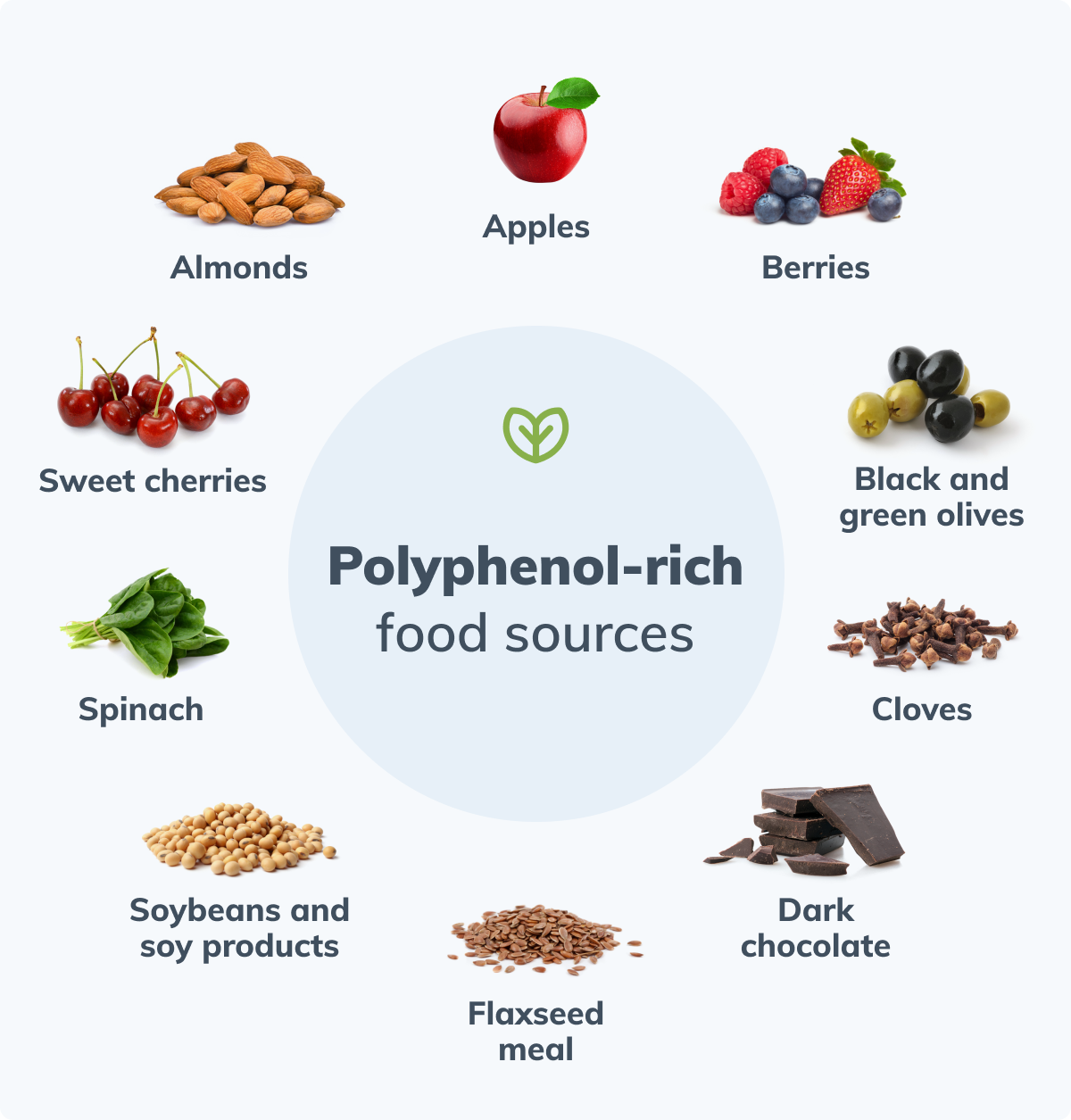
Recognizing polyphenols in food can be done by taste. It's important to note that the taste of a food isn't just due to its polyphenols. The overall flavor is a complex combination of sugars, fats, acids, and other compounds. However, if a food has a noticeable bitter, pungent or astringent quality, it's often a good sign that it's rich in polyphenols.
Bitterness
This is a major sensory attribute of many polyphenol-rich foods. Think of the taste of dark chocolate, black coffee, or bitter greens like chicory.
Astringency
This is a different sensation than bitterness. Astringency is a drying, puckering, or rough feeling in your mouth. A good example is the sensation you get from a strong cup of black tea or a dry red wine, caused by tannins, which are a type of polyphenol. Or try fresh rhubarb and feel your mouth pull together.
Pungency
Polyphenols are not hot like peppers (which are on its own rich in polyphenols), but most react to sensors in your mouth and throat, providing a peppery sensation. In some foods, like high-quality extra virgin olive oil, polyphenols can create a peppery or spicy sensation that you feel in the back of your throat, disabling you to use your vocal cords for a few seconds.
Bright colours are also an indicator of polyphenols. Most polyphenol-rich foods are brightly colored due to compounds like anthocyanins.
In our next editions, we will provide evidence how polyphenols support athletic performance (and faster recovery from strenuous exertion), improve your gut (which some people call “the second brain”) and how it stops ageing and can improve good looks. Yes, really!